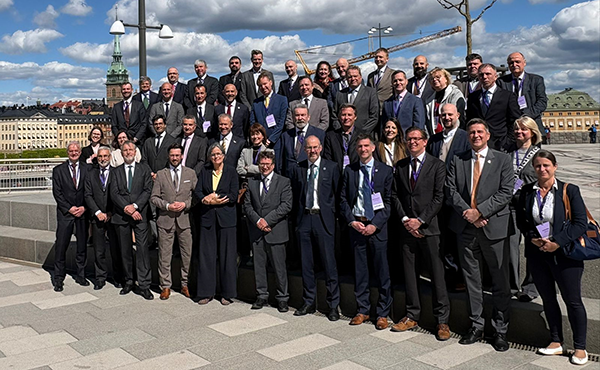
The WENRA Spring 2026 Plenary in Stockholm showed that European nuclear regulators are facing a rapidly changing safety landscape: new reactor designs, climate and grid resilience, emerging maritime nuclear applications, and the continuing war in Ukraine. Across the discussions, one common theme stood out: the real leadership challenge is prioritisation — deciding what matters most and how limited regulatory expertise can deliver the greatest safety value.
A key decision was the further development of EN-GARDE — the European Generic Assessment of Reactor Designs. WENRA approved the initiative’s new name, governance approach, expert ad hoc group and use of the AP1000 design as a pilot case. EN-GARDE aims to support a high and consistent level of nuclear safety for new reactors in Europe, while helping regulators make better use of each other’s assessments and supporting more efficient national licensing processes.
For the EU Third Topical Peer Review, WENRA tasked RHWG to further develop three possible topics: operating experience, climate change and natural hazards, and grid instability. The aim is to identify a technically strong topic with clear safety significance, realistic scope and sufficient expert support — in other words, a topic that can deliver real European-level safety benefit.
Emerging nuclear technologies, especially fusion and maritime applications, were another major focus. WENRA agreed to publish a statement on a maritime nuclear regulatory framework, underlining that innovation must be matched by robust, internationally consistent safety arrangements. Nuclear safety, security and safeguards principles must also apply at sea, with clear responsibilities for regulators, flag states and international organisations. Most importantly, WENRA called for close collaboration between the IAEA and IMO.
Ukraine remained central to WENRA’s work. SNRIU’s update confirmed that the war continues to create profound and systemic nuclear safety challenges, particularly regarding Zaporizhzhia NPP, grid reliability and wider infrastructure resilience. WENRA will continue to follow developments closely and support the Ukrainian regulator, recognising the extraordinary efforts needed to maintain safety under conditions no regulatory system was designed to withstand.
The plenary also reflected on the 10th Review Meeting of the Convention on Nuclear Safety. Its Major Common Issues — competence, climate risks, emerging technologies, emergency preparedness, armed conflict and supply chains — strongly align with WENRA’s priorities. WENRA will prepare more systematically for the next review cycle to ensure its contribution remains impactful.
At the same time, WENRA’s working groups continue to deliver the foundations of harmonised nuclear safety across reactor safety, research reactors, waste and decommissioning, safety objectives and competence development. Several groups were asked to review their priorities, scope and resources before the Fall 2026 plenary, where discussion on WENRA strategic review is foreseen. This reflects the broader message from Stockholm: strengthening nuclear safety in a changing world requires not only ambition, but focus.
